
Prove measurable customer experience impact and ROI.

What is Human Centered Design Measurement?
HCD Measurement embraces the rigorous tracking of complex, indirectly measurable phenomena like customer experience, engagement, trust, satisfaction and move beyond flat backward-looking metrics like visitor counts and Likert scores.
The Measurement Guide, the blueprint to CX measurement for all your teams, provides the logic data scientists use but translated for professionals who need to prove impact in contexts where all variables can't be controlled.
The HCD Measurement Guide is based on a directly references the work of:
- Organisation for Economic Co-operation and Development (OECD)
- U.S. National Science Foundation (NSF, pre-2025)
- U.S. Agency for International Development (USAID, pre-2025)
- United Nations Economic Commission for Europe (UNECE)
- The work of various European Union national statistics offices


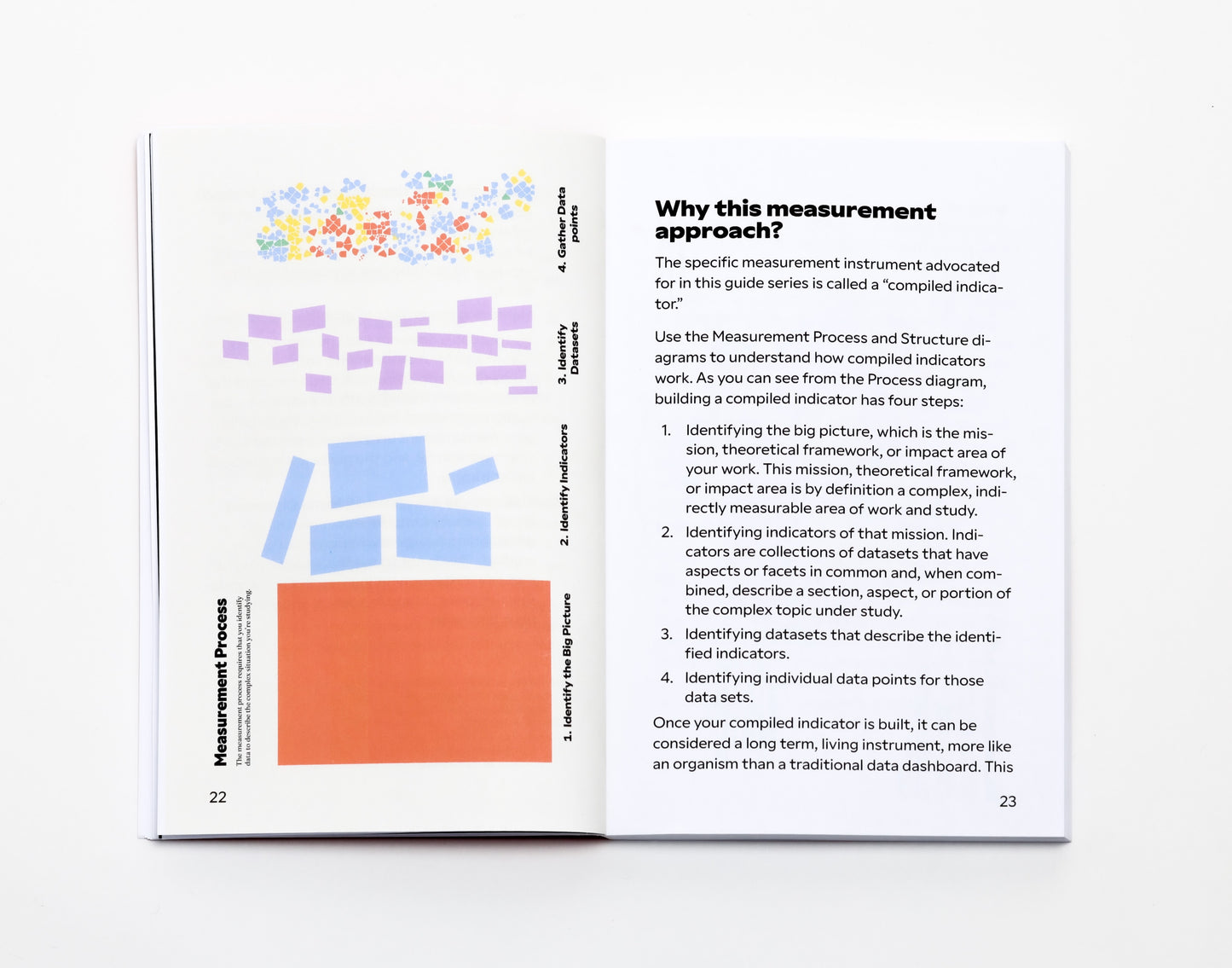
What's inside

Complete measurement process overview
The Measurement Concepts Guide provides the "why" of this measurement approach—built from citations from experts like the National Science Foundation (US), the UN Economic Commission for Europe, and Eurostat, the EU statistical office.
Is there evidence that this works?
The process in the HCD Measurement Guide was modeled and tested by GSA’s Enterprise Digital Experience (EDX) project (2021-2025) and informed by 8.5 years of mixed methods innovation and process improvement work in the US federal government.
A case study for this work can be found in Determining the true value of a website: A GSA case study. The complete approach to the EDX project won plaudits from the Government Accountability Office in Digital Experience: Agency Compliance with Statutory Requirements GAO-24-106764 (pg. 39).
The specific measurement approach that informed the EDX process was gleaned from white papers, case studies, and academic texts generated by the following organizations, in addition to others:
- Organisation for Economic Co-operation and Development (OECD)
- U.S. National Science Foundation (NSF, pre-2025)
- U.S. Agency for International Development (USAID, pre-2025)
- United Nations Economic Commission for Europe (UNECE)
- The work of various European Union national statistics offices
Can we see the citations?
Yes, all these works are cited in footnotes in the Measurement Guide for your additional reference.
The Measurement Guide has the research background and analytical rigor of any serious academic text, but with readable, human-centered text and the additional benefit of instructive, engaging visualizations of key processes and concepts for your convenience.

Mixed Methods Data Handling
The best measurement tools reflect the complexity of the world we live in, and that means using a mixed methods approach to measurement.
The Measurement Guide provides step-by-step instruction in the mixed use of qualitative, quantitative, and historical data—so you can achieve bring your impact into sharp, evidence-based focus.
How is HCD Measurement better than other processes?
HCD Measurement ties measures directly to your mission and strategic planning to create a balanced scorecard that’s truly balanced and strategically sound.
This contrasts with most measurement frameworks and dashboards that display a massive array of data points untethered to your strategic plan, organizational mission, and the impact your teams need to have.
The HCD Measurement process detailed in the HCD Measurement Guide was built over 8.5 years with federal agencies like GSA and VA to measure real impact in highly variable and highly regulated environments.
It's intellectually rigorous enough to defend to data scientists and boards, but practical enough to implement while actually running the organization.

Step-by-Step Guidance
The Measurement Guide provides complete, step-by-step instruction on how to create a human-centered customer experience, innovation, or process improvement tool—so that you can make the best decisions to understand your ongoing impact.
Why is HCD Measurement crucial for my organization?
HCD Measurement gives you and your teams the systematic approach to building measurement instruments capable of capturing strategic impact. And that impact is what actually matters for your CX, DX, and overall strategic goals.
Right now, you make high-dollar decisions about customer experience, digital transformation, and organizational culture with measurement systems designed for simple outputs, not complex outcomes. That makes it tough to raise evidence-backed arguments for investments or course-correct with confidence.
Setting up HCD Measurement means gaining the evidence for investments and confidence to pivot when needed.
You, your peers, and your board can finally stop divining direction from dashboards built on tactical data and start understanding the overall strategic, mission-driven impact your work has, no matter how internally-focused or regulated your scope is.
What’s the final word on the HCD Measurement Guide?
The HCD Measurement Guide provides comprehensive customer experience measurement methodology for c-suite professionals leading teams that need to demonstrate measurable impact and ROI.
This systematic framework equips your teams to measure complex, multidimensional outcomes—customer trust, engagement, and satisfaction—without requiring enterprise analytics platforms or control over all operational variables.
The compiled indicators approach has been built on the work of major institutions including OECD, USAID, UNECE, and the European Union's Eurostat, providing credible evidence-based methodology for organizational decision-making. It has been used by federal agencies like the General Services Administration (GSA) and taught at the Ohio State University (the OSU) in order to prove the value and guide the evolution of customer experience investments.
With the HCD Measurement Guide, your teams gain permanent measurement capability rather than platform dependency.
Why is there both “human-centered” and “human centered” on this page?
Both spellings appear on our pages for one reason: search optimization. "Human-centered" (with hyphen) is grammatically correct and appears in all our formal content. "Human centered" (no hyphen) is how most professionals search for this methodology online. We've strategically included both to ensure your teams can find these resources through standard search behavior while maintaining professional standards in the actual content.

HCD Discovery Guide
From problem framing and desk research through recruiting, interviewing, and synthesis, the HCD Discovery Guide moves you through customer research.